Why Heritage Homes Need a Different Marketing Approach
Walk through any established Melbourne suburb, any Federation-era street in Sydney's inner west, or any Queensland Federation corridor in Brisbane, and you'll find homes that refuse to be treated like ordinary listings. They have pressed-metal ceilings, leadlight windows, wide verandahs, and stories baked into their walls. Yet too often, agents market these homes the same way they'd market a new build — a handful of photos, a standard feature list, and a price guide.
It's no wonder heritage and period properties can sit on the market longer than they should. The buyers who love these homes aren't comparing square metres. They're imagining themselves as the next chapter in a story that began a century ago. If your marketing doesn't speak to that emotional pull, you're leaving money on the table — and often, a lot of it.
In this guide, we'll walk through practical, proven ways to market heritage, period, and character homes in Australia, including how modern AI tools can help you tell richer stories without doubling your workload.
Understanding the Heritage Home Buyer
Before you write a single line of marketing copy, it helps to understand who's actually buying heritage homes in Australia. The audience is narrower than for a generic family home, but it's also more motivated — and often willing to pay a premium.
The Three Common Heritage Buyer Profiles
- The Restoration Enthusiast — Actively seeks out period features, knows the difference between Edwardian and Californian Bungalow, and wants a project they can pour themselves into.
- The Character Seeker — Loves the charm but isn't necessarily a renovator. They want a home that feels distinctive and layered, with original features intact or sympathetically restored.
- The Location-First Buyer — Is drawn to the suburb (think Paddington, Fitzroy, or West End) and accepts that a heritage home comes with the territory. They need education and reassurance, not just inspiration.
Each of these buyers responds to different messages. The restoration enthusiast wants to know what's original and what's been altered. The character seeker wants to feel the atmosphere. The location-first buyer needs to understand what owning a heritage home actually involves — permits, overlays, maintenance costs, and all.
Practical Tip: Profile Before You Pitch
Before you draft your listing copy or brief a photographer, spend an hour researching comparable sales in your suburb. Look at the marketing language that worked. Were buyers responding to the architectural pedigree, the lifestyle, or the location? Use that to shape your narrative.
The Marketing Gap Most Agents Miss
Here's the uncomfortable truth about heritage home marketing in Australia: most listings undersell the one thing that makes the property valuable — its story.
A standard listing might mention that a home is "charming", "full of character", or "a rare opportunity". These phrases are so overused they've lost all meaning. What buyers actually want to know is:
- When was the home built, and by whom?
- What architectural style is it, and what are the defining features of that style?
- What significant events or owners are associated with the property?
- How has the home evolved over time — and what's been preserved?
- What makes this home different from the ten other period homes currently listed nearby?
Answering these questions transforms a listing from forgettable to compelling. It also gives you material for a dedicated property website — which, for heritage homes, is one of the most effective marketing investments you can make.
Building a Narrative-Driven Property Website
A single listing page on a portal doesn't give you the space to tell a heritage home's full story. A dedicated property website does. It allows you to combine architectural history, lifestyle narrative, high-quality imagery, and practical information (like heritage overlays and permit considerations) in one place.
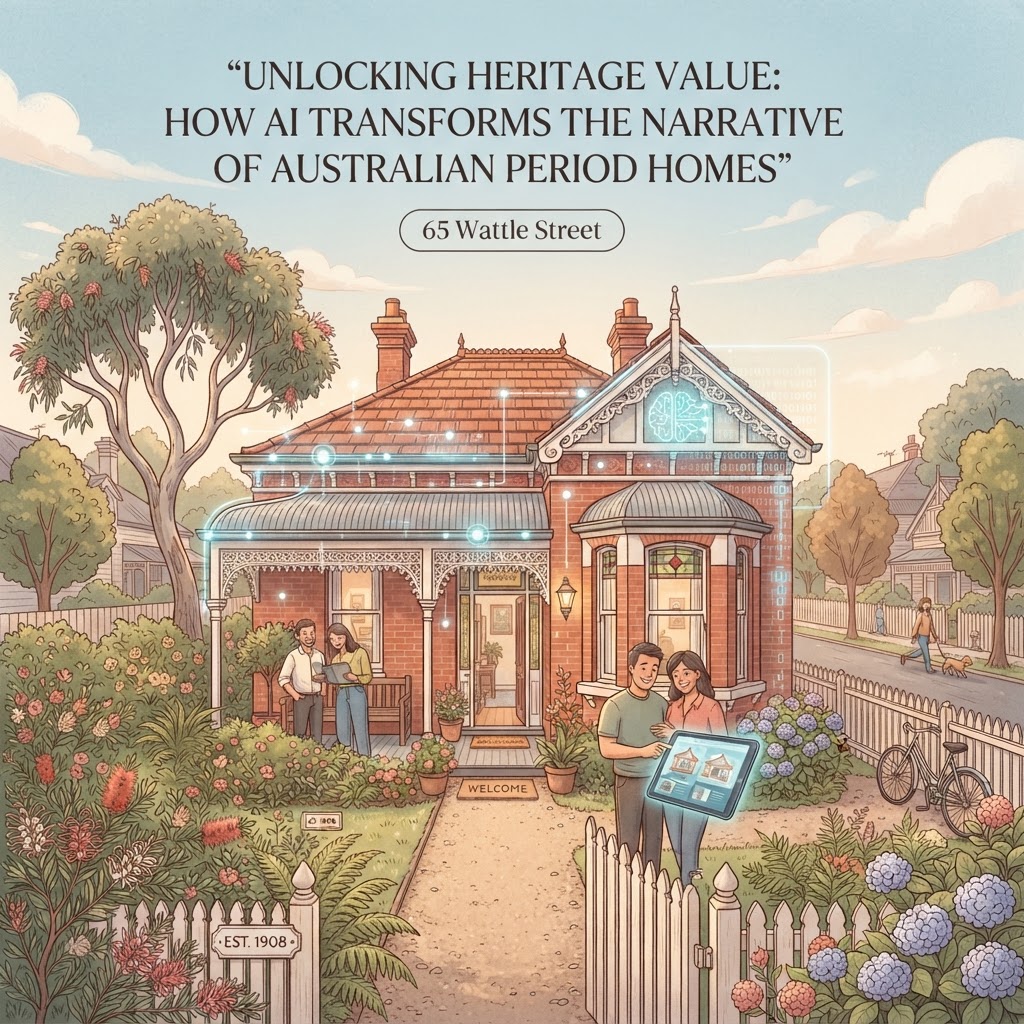
This is where a platform like HomeHeritage becomes genuinely useful for Australian agents. Rather than building a custom site from scratch for every character listing, HomeHeritage uses AI to help you generate story-led property websites that reflect the unique architectural and historical identity of each home. You provide the property details and images; the platform helps shape the narrative, structure the content, and produce a polished, shareable site.
For agents handling multiple period listings, this kind of tool can be the difference between every listing feeling bespoke and every listing feeling generic.
What a Strong Heritage Property Website Should Include
- An architectural overview — The style, the era, and the defining features worth highlighting
- A historical narrative — The home's story, told in a way that's accurate but engaging
- A feature gallery — Close-up photography of original details (cornices, fireplaces, tiling, joinery)
- A lifestyle section — How the home lives day to day, and how it connects to the local area
- Practical considerations — Heritage overlay information, any known restrictions, and guidance for prospective buyers
- A clear call to action — Inspection times, contact details, and next steps
Writing Heritage Copy That Actually Sells
Good heritage marketing copy is specific, evocative, and honest. Vague superlatives don't work. Precise descriptions do.
Before and After: Rewriting Heritage Listing Copy
Before: "This charming Federation home is full of character and offers a rare opportunity for buyers seeking a piece of history."
After: "Built circa 1908, this Federation home retains its original leadlight casement windows, ornate plaster ceilings, and brick chimney stack. A sympathetic rear extension, completed in 2015, added a contemporary kitchen and living zone while preserving the home's streetscape presence. It's a home that tells its story clearly — and invites the next chapter."
The second version does three things the first doesn't: it dates the home, it names specific features, and it acknowledges the home's evolution. That's the standard you should be aiming for.
Practical Tips for Heritage Copywriting
- Use correct architectural terminology, but don't overdo it — buyers want to learn, not feel lectured
- Be honest about alterations and additions; authenticity builds trust
- Mention the suburb's heritage context if the home itself is less historically significant
- Include sensory language — light, proportion, texture, sound — to help buyers imagine the space
- Keep paragraphs short; heritage copy should feel elegant, not exhausting
Photographing Period Properties the Right Way
Photography can make or break a heritage listing. Poorly lit, wide-angle shots that flatten the detail of a period home do it a serious disservice. Heritage buyers want to see the craftsmanship.
A Heritage Photography Brief Worth Using
When briefing a photographer for a period or character home, ask for:
- Detail shots of original features — cornices, ceiling roses, skirting boards, hardware, tiling
- Natural light photography that shows how light moves through the home across the day
- Contextual exteriors that show the home in its streetscape, not isolated
- Sympathetic staging that doesn't clash with the home's era
- Floor plan clarity — buyers of older homes want to understand the layout, quirks and all
Avoid heavy HDR processing that makes period homes look artificially glossy. Heritage buyers are drawn to authenticity, and over-processed images can undermine that.
Using AI Tools Without Losing the Human Touch
There's a reasonable concern among Australian agents that AI-generated content can feel hollow or generic. That's a fair worry — but it's also a problem with how the tools are being used, not with the tools themselves.
The key is to treat AI as a research and drafting assistant, not as a replacement for your own knowledge of the property and the local market. A platform like HomeHeritage works best when you feed it specific, accurate information — the year built, the architectural style, the notable features, the suburb context. The AI then helps you structure and articulate that information in a way that's polished and engaging, saving you hours of writing and formatting time.
Where AI Adds Genuine Value in Heritage Marketing
- Researching architectural context — Confirming the defining features of a style, common construction methods, and historical timelines
- Structuring narrative content — Turning raw notes into a flowing, readable story
- Generating website copy at scale — Particularly useful if you're handling multiple listings simultaneously
- Repurposing content — Adapting a property website's narrative into social posts, email campaigns, and brochure copy
Where You Should Stay Hands-On
- Verifying historical claims — AI can occasionally hallucinate dates or details, so always fact-check anything presented as historical fact
- Infusing local knowledge — No AI tool knows your suburb the way you do
- Reviewing tone — Heritage marketing should feel refined and respectful; make sure the final output reads that way
Heritage Overlays and Buyer Education
One of the most overlooked aspects of heritage home marketing in Australia is buyer education. Many prospective buyers are nervous about heritage overlays, assuming they'll make renovation impossible. In reality, overlays vary significantly between councils and states, and many heritage homes have considerable flexibility for sympathetic alterations.
Including clear, plain-English information about heritage considerations in your marketing material does two things: it reduces friction for nervous buyers, and it positions you as a knowledgeable, trustworthy agent.
What to Include in Your Heritage Information Section
- The relevant heritage overlay or listing (if applicable)
- Which parts of the home are protected and which aren't
- Common permitted alterations (e.g. rear extensions, interior updates)
- Where buyers can find more information (council heritage advisor, local heritage society)
- Any pre-existing permits or recent council interactions
You don't need to provide legal advice — you simply need to point buyers in the right direction and show that you understand the landscape.
Distribution: Getting Your Heritage Story in Front of the Right Buyers
Once you've built a compelling narrative and a dedicated property website, the final step is distribution. Heritage home buyers aren't always browsing the major portals the way general buyers are. They're often found in more targeted spaces.
Channels Worth Considering
- Heritage and architecture-focused social media accounts — Instagram accounts dedicated to Australian heritage homes have engaged, niche audiences
- Local historical societies and community groups — They often have newsletters or social channels where a well-presented listing is welcomed
- Architectural and design publications — Consider pitching particularly significant homes to publications like Houses or The Design Files
- Targeted email lists — If you've sold heritage homes before, your past enquiries are a warm audience for future listings
- Your own agency database — Segmented by buyers who've previously enquired about character homes
A strong property website gives you something concrete to share across all these channels — a single, shareable link that tells the home's full story rather than redirecting to a portal listing.
Measuring What Works
As with any marketing effort, it's worth tracking what's actually driving interest in your heritage listings. Key metrics to monitor:
- Website traffic to your dedicated property site
- Time on page (longer engagement suggests the narrative is resonating)
- Enquiry source — are buyers finding you through the portal, social, or direct shares?
- Inspection attendance versus enquiry volume
- Final sale price relative to comparable non-narrative-driven listings
Over time, you'll get a clearer picture of which storytelling approaches and distribution channels deliver the best results for your market.
The Bottom Line for Australian Agents
Heritage and period homes are not commodity listings. They're properties with identity, history, and emotional weight. The agents who sell them most successfully — and most profitably — are the ones who invest in telling their stories properly.
That doesn't mean working harder on every listing. It means working smarter, using the right structure, the right photography, the right copy, and the right tools. Platforms like HomeHeritage exist precisely to help Australian agents do this at scale — producing story-led property websites that give character homes the marketing they deserve, without turning every listing into a bespoke project.
If you're selling heritage homes in Australia and still relying on standard portal listings alone, you're underselling your properties and underselling yourself. It's time to start selling stories, not just structures.