The Emotional Currency of Heritage Property
Selling a heritage home in Australia is rarely just about floor plans, square metres, or the latest renovation specs. When dealing with period homes—be it a Federation semi in Sydney, a Victorian terrace in Melbourne, or a Queenslander in Brisbane—you are selling a piece of history. Prospective buyers of these homes are not just searching for shelter; they are searching for a sense of belonging to a lineage. This is what we call the 'Provenance Effect'.
Moving Beyond Standard Listings
Traditional real estate marketing often falls into the trap of listing features rather than benefits. For heritage homes, standard descriptions like 'original fireplaces' or 'leadlight windows' feel clinical. They fail to capture the soul of the dwelling. To command a premium, agents must transition from being information providers to becoming curators of a story.
The Power of Narrative Intelligence
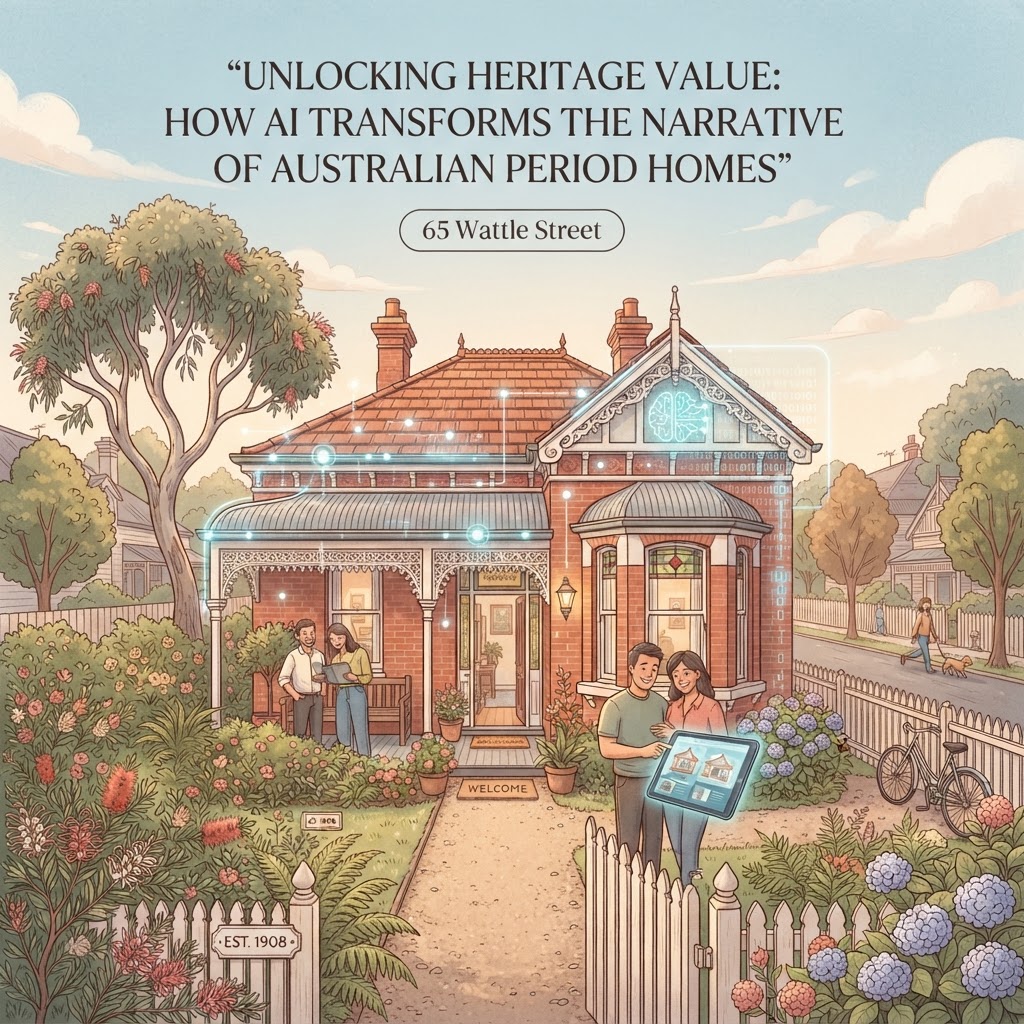
Narrative intelligence is the ability to weave historical data, architectural significance, and emotional resonance into a cohesive sales pitch. This is where HomeHeritage acts as a force multiplier for your agency. By using AI to synthesise local archives, historical records, and architectural styles, HomeHeritage creates rich, narrative-driven content that makes a property feel 'lived-in' before the buyer ever steps through the front door.
How to Research the History of Your Listing
To build a compelling story, you need to dig deep into the property's past. Here is a practical checklist for agents:
- Council Archives: Look for original building applications to see who designed the house and when it was commissioned.
- Trove (National Library of Australia): Search for the property address to find mentions in historic newspapers. You might discover who lived there during the war or how the street has evolved over 100 years.
- Neighbourhood Lore: Speak to long-term residents. Anecdotes about the 'old oak tree' or the 'local postman's former residence' add layers of authenticity.
- Architectural Style Guides: Familiarise yourself with the specifics of your property’s style (e.g., Arts and Crafts, Edwardian, or Inter-War) to articulate why it has stood the test of time.
Leveraging AI for Consistent Storytelling
Writing high-quality, evocative copy for every heritage listing is time-consuming. HomeHeritage solves this challenge by automating the synthesis of complex historical data into elegant, emotive prose. Instead of struggling to find the right adjectives for a heritage facade, you can feed architectural details into the HomeHeritage AI engine, which then generates a sophisticated narrative tailored to the discerning buyer.
Practical Tips for Heritage Photography
- Focus on Textures: Capture the warmth of original floorboards and the intricate craftsmanship of cornices.
- Twilight Shots: Heritage homes often have character lighting that only truly shines at dusk.
- Contextual Imagery: Don't just show the house; show the home in its streetscape. If the house belongs to a historic precinct, document the charm of the surrounding area.
Creating the 'Heritage Premium' Through Digital Experience
In the current market, digital presence is everything. A static PDF brochure is no longer enough. Buyers want an immersive digital experience that mirrors the historical depth of the property.
By integrating the narratives generated by HomeHeritage into a bespoke, story-led property website, you create a dedicated digital 'shrine' to the home. This increases dwell time, boosts buyer emotional investment, and ultimately, helps you justify a higher price point. When a buyer falls in love with the story of the home, the price becomes secondary to the desire to own that particular piece of history.
Overcoming Objections in Heritage Sales
One of the biggest hurdles in selling period homes is buyer concern regarding maintenance and upkeep. Here is how to use storytelling to mitigate those fears:
- Highlight Restoration Success: If the current owners have done heritage-sensitive renovations, frame this as 'preserving the legacy' rather than 'fixing the house'.
- Future-Proofing: Use your narrative to explain how the home has evolved over decades, framing it as an adaptable, enduring structure.
- The Community Factor: Emphasise the 'slow living' aspect of heritage suburbs, which is a significant drawcard for buyers looking to escape the modern-day hustle.
Conclusion: The Future of Property Sales
The future of Australian real estate lies in the intersection of tradition and technology. As an agent, your ability to tell a compelling, historically accurate story is your greatest competitive advantage. By leveraging AI platforms like HomeHeritage, you can reclaim your time and focus on what you do best: building relationships and closing deals. Stop selling houses, start preserving stories, and watch how your property market performance transforms.